
That software is called an Applicant Tracking System, or ATS, and it's the reason so many perfectly good candidates end up screaming into the void. Long before a recruiter opens your resume (if they ever do), the ATS scans it, chops it up into data, and quietly decides whether you're worth passing along. Formatting, keywords, structure. That's what it cares about. Not your actual talent. And as applicant tracking system India adoption spreads across IT, banking, and startup hiring teams, knowing how to beat this thing has basically become a required job-search skill.
So let's get into why this happens so often, what the numbers actually say, and how tools like JobScans help you slip past the algorithm and land in front of a real person.
Table of Contents
- What Is an ATS and Why Does ATS Resume Rejection Happen So Often?
- The Real Numbers Behind ATS Resume Rejection
- How Applicant Tracking System India Adoption Is Reshaping Hiring
- Top Reasons Resumes Fail ATS Screening
- ATS-Friendly vs. ATS-Unfriendly Resumes: A Side-by-Side Comparison
- How to Avoid ATS Resume Rejection: A Practical Checklist
- How JobScans Helps You Beat ATS Resume Rejection
- Frequently Asked Questions
What Is an ATS and Why Does ATS Resume Rejection Happen So Often? {#what-is-an-ats}
An Applicant Tracking System is software companies use to collect, sort, filter, and rank job applications before a human recruiter reviews any of them. Rejection happens because these systems are built to parse your resume into neat little boxes of data, your name, skills, job titles, dates, education, and if your formatting or keywords don't line up with what the system expects, you get scored badly or dropped entirely.
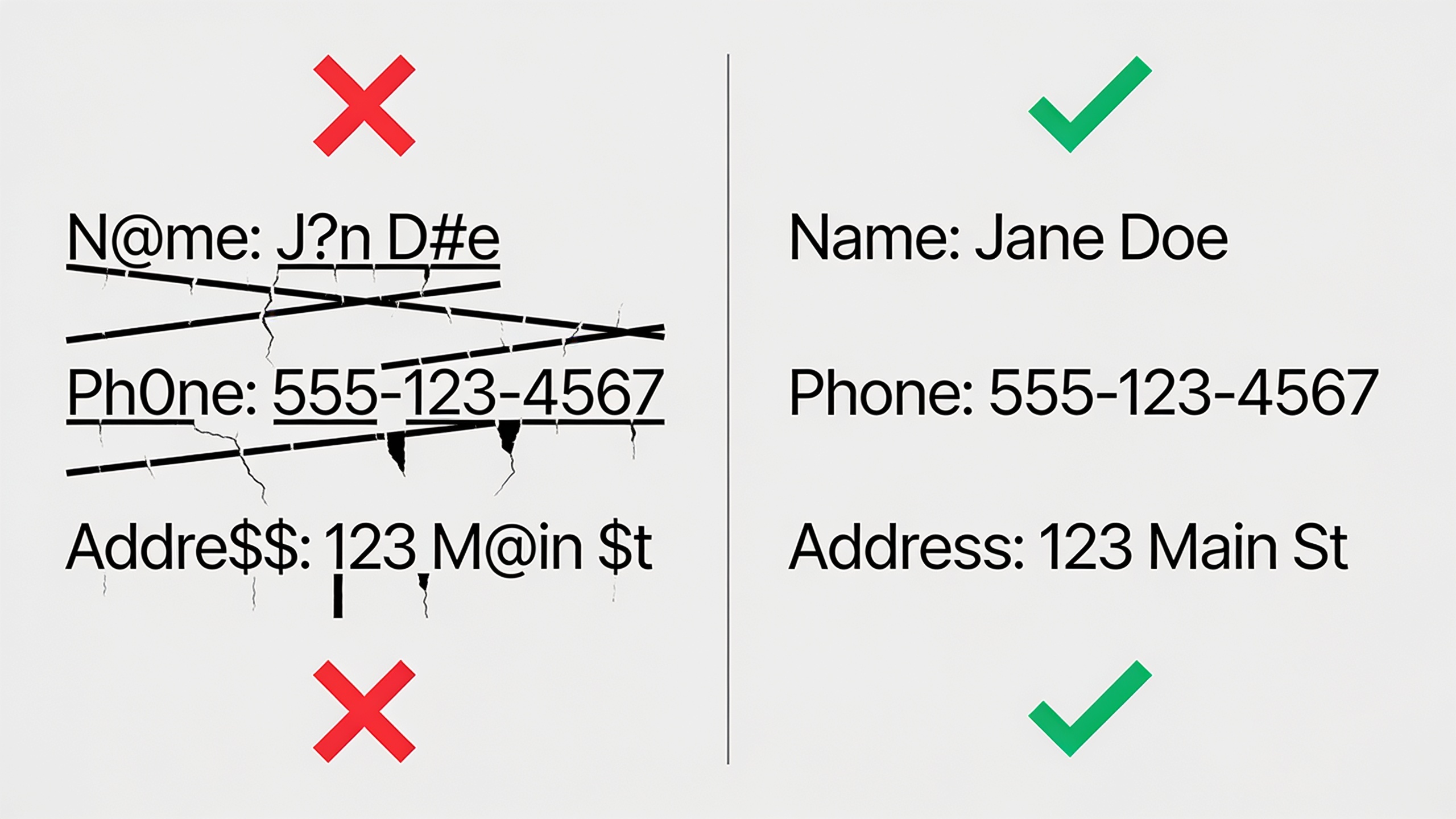
Think of an ATS less like a thoughtful judge and more like a bouncer with a clipboard. It doesn't read your resume the way a person does. It rips out the text and tries to match it against the job requisition a recruiter set up. So when your resume leans on tables, columns, graphics, funky fonts, or headers the parser can't handle, the software might garble your job titles, skip your work history entirely, or just fail to notice half your skills. Even if you're a flawless fit for the role. That's the frustrating part. The rejection usually has nothing to do with whether you can do the job and everything to do with whether the software can read that you can.
Big companies simply don't have the staff to hand-review every application for a popular opening, so at scale, an ATS is kind of unavoidable. But that same efficiency is exactly what quietly buries good people. It's a tension that hiring researchers have been poking at for years, which brings us to the numbers.
The Real Numbers Behind ATS Resume Rejection {#the-numbers}
The data keeps pointing to the same uncomfortable truth: automated filtering, not a lack of qualifications, is a leading reason resumes vanish into hiring black holes. Harvard Business School's "Hidden Workers: Untapped Talent" report from 2021, led by Joseph Fuller and colleagues, found that 88% of the executives surveyed admitted qualified, high-skill candidates are routinely filtered out by their own ATS and screening criteria before any human sees them. Sit with that for a second. It's not that the software is catching weak applicants. It's actively screening out strong ones because of rigid keyword matching and formatting mismatches.
On top of that, workforce research from the Society for Human Resource Management (SHRM) has found that most large employers rely on some kind of talent acquisition or applicant tracking software to run their hiring pipelines, especially for high-volume roles like entry-level, sales, and customer support jobs. Same story in every market, really. The more applications pour in, the harder companies lean on automation, and the less forgiving the system gets toward any resume that isn't cleanly machine-readable.
Which is exactly why that "75% rejection" figure floating around career forums and recruiting blogs hits home for so many people. Sure, the exact rejection rate swings depending on the company, the industry, the role. But the direction never changes. As automated screening becomes standard, resumes that aren't built for parsing accuracy face meaningfully worse odds of ever reaching a human.
How Applicant Tracking System India Adoption Is Reshaping Hiring {#india-adoption}
Applicant tracking system India usage has exploded, mostly because the country's IT services, BPO, banking, and startup sectors are drowning in applicants for every single opening. One job post on a major Indian portal can pull in hundreds, sometimes thousands, of applications in a matter of days. So recruiters at the big IT firms, the GCCs (global capability centers), and the fast-growing startups increasingly rely on ATS software to triage all of that before anyone spends real time reviewing by hand.
This hits two groups the hardest. Fresh graduates working the campus and off-campus drives, and mid-career folks trying to jump industries. Freshers tend to grab generic templates off the internet, and a lot of those use multi-column layouts, icons, and graphics that look slick to a human but completely baffle a parser. Career switchers have a different headache. Their resumes are packed with jargon from their old field, none of which matches the keywords an ATS is hunting for in the new one, even when the skills underneath are totally transferable.
So as applicant tracking system India adoption keeps growing across both the MNCs and homegrown companies, anyone who doesn't adjust their resume to be machine-readable is starting the race a few steps behind. Doesn't matter how good the actual experience is. That's the gap resume-optimization tools exist to close, and it's a big reason platforms aimed at the Indian job market, JobScans among them, have popped up to show candidates exactly where their resume is falling apart before they hit submit.
Top Reasons Resumes Fail ATS Screening {#top-reasons}
Most ATS rejections come down to a small handful of fixable problems, not a shortage of qualifications. Here's what recruiters and career coaches complain about over and over.
Formatting the parser can't read. Multi-column layouts, text boxes, tables, headers and footers, image-based resumes (yes, some people submit basically an infographic). These get scrambled or skipped outright by ATS parsing engines. If your resume looks visually impressive but depends on anything fancier than a simple single-column structure, there's a genuine chance the software never sees half your content in the right order.
Missing or mismatched keywords. ATS software generally ranks resumes by matching your language against the language in the job post. So if the listing asks for "stakeholder management" and your resume says "client handling," the system might not connect the dots, even though any human would in a heartbeat. This is one of the most common causes of rejection, and honestly one of the easiest to fix once you know to look for it.
Non-standard section headings. Calling your work history "My Journey" or your skills section "What I Bring" feels charming, but the parser is programmed to look for boring labels like "Work Experience" and "Skills." Get cute with your headings and the software may just shrug and move on.
Then there's the file format problem. Some ATS platforms choke on certain file types, particularly those heavily designed PDFs exported out of graphic design software, or resumes saved as image files. A clean, text-based PDF or Word doc is almost always the safer bet unless the posting tells you otherwise.
And don't sleep on inconsistent dates and job titles. Gaps, vague date formatting (like "2019-Present" with no month), or job titles phrased three different ways can trip up the parser and make your career history look incomplete or even contradictory, when in reality it's perfectly solid.
But if I had to name the single biggest culprit, it's the generic, one-size-fits-all resume. Blasting the exact same resume to every job you apply to, ignoring each role's specific keywords and requirements, is probably the number one reason qualified people get filtered out. Every requisition an ATS scores against has its own criteria. A resume that isn't tuned to it will consistently underperform, even from a genuinely great candidate.
ATS-Friendly vs. ATS-Unfriendly Resumes: A Side-by-Side Comparison {#comparison}
The gap between a resume that clears screening and one that gets dumped usually comes down to a few structural choices. Here's a quick comparison of what tends to help versus what tends to sink you.
| Resume Element | ATS-Friendly Approach | Common ATS-Unfriendly Mistake |
|---|---|---|
| Layout | Single column, linear structure | Multi-column or table-based layout |
| File format | Text-based Word (.docx) or PDF | Image-based PDF or scanned resume |
| Section headings | Standard labels ("Work Experience," "Education") | Creative headings ("My Story," "Career Highlights") |
| Keywords | Matched directly to job description language | Synonyms or industry jargon that don't match posting |
| Fonts | Standard fonts (Calibri, Arial, Times New Roman) | Decorative or script fonts |
| Contact info placement | In the body text, not header/footer | Inside a header or footer field |
| Graphics/icons | Avoided or minimal | Heavy use of icons, charts, or photos |
| Tailoring | Customized per job application | Same generic resume sent to every role |
| Dates | Consistent month/year format throughout | Inconsistent or missing date formats |
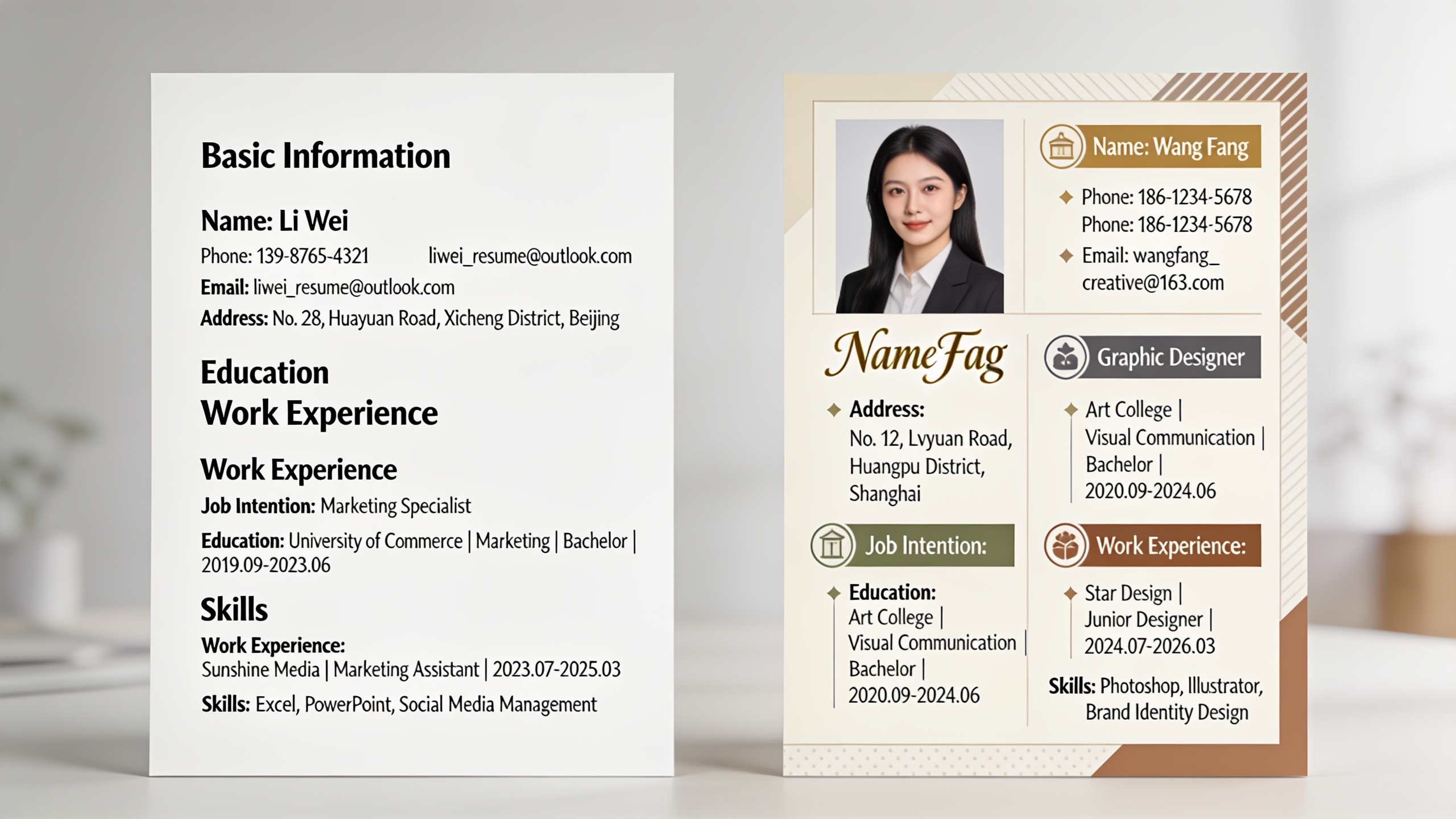
The table makes one thing pretty obvious. Rejection is rarely about your career story. It's about whether the machine can actually pull that story out in the first place.
How to Avoid ATS Resume Rejection: A Practical Checklist {#checklist}
Dodging ATS rejection basically means making your resume both machine-readable and closely matched to the specific job you're chasing. Here's the order I'd work through before submitting anything.
Start by stripping your resume down to a clean, single-column format with standard section headings and a plain, boring, widely supported font. Then read the job description like your career depends on it (because it kind of does) and mirror its exact wording wherever it honestly applies to your experience. If they say "project management," you say "project management," not some clever near-synonym. Next, save your final version as a text-based PDF or Word document, never an image or some heavily designed export. And double-check that your dates, job titles, and contact info are consistent and clearly labeled all the way through.
Last one, and this is the one everybody skips: treat every single application as its own tailoring job instead of recycling one static resume. It's tedious. Nobody wants to do it manually for the fiftieth posting. That's precisely the gap fitment-scoring and auto-tailoring tools are built to fill. If you want to actually know how well your resume lines up with a role before you apply, rather than crossing your fingers, this breakdown of what a resume fitment score is and why it matters walks through how a single number can reflect your real alignment with a posting's requirements.
How JobScans Helps You Beat ATS Resume Rejection {#jobscans}
JobScans is an AI-driven job-search platform built for the Indian job market that shows you exactly how well your resume matches a specific job posting before you apply. According to its own platform description, you upload your CV, get a 0–100 fitment score for any job, and it'll auto-tailor your resume and generate cover letters based on that analysis. Which directly attacks the two things that cause most rejections: bad keyword matching and lazy, one-size-fits-all customization.
Instead of leaving you to guess whether your resume will parse cleanly or hit a recruiter's ATS criteria, JobScans puts a number on it. You get a concrete sense of where your application actually stands before you send it off. That's especially handy for the two groups rigid ATS filtering punishes the most: fresh grads who don't yet know which keywords matter for a given role, and industry-switchers who need to reframe their old experience in the language a new field's postings are looking for.
And since it's described as free to start, it's a pretty low-commitment first move if you want to check your resume's fitment before burning an afternoon tailoring it by hand for every listing. Given how much applicant tracking system India adoption has raised the stakes on getting that first-pass screening right, that's not nothing.
If you're the type who likes keeping tabs on how AI and tech are quietly reshaping everyday stuff like hiring, outlets like Newsrum cover the broader tech and workplace trends that sit right alongside all this AI-driven recruitment software, useful context if you want to zoom out beyond the job hunt itself.
Frequently Asked Questions {#faq}
Does every company actually use an ATS to screen resumes?
Not all of them, no. But a big chunk of mid-size and large organizations, especially the ones flooded with applications, lean on some form of applicant tracking system to run their pipeline. Smaller companies and early-stage startups with fewer applicants might still do more of the review by hand. Still, ATS usage keeps climbing across sectors, India's IT and services industries very much included.
Can a genuinely great resume still get rejected if I'm qualified?
Yes, and it happens all the time. Rejection is often a formatting and keyword problem, not a qualifications problem. You can be a perfect fit and still get bounced if your layout confuses the parser or if you didn't use the specific wording the ATS is scoring against from the job description.
How do I even know if my resume is ATS-friendly?
Watch out for the usual red flags first: multi-column layouts, tables, graphics, quirky section headings, and image-based files. All of those mess with clean parsing. Beyond formatting though, checking how your resume's keywords actually stack up against a specific job description, say with a fitment-scoring tool, tells you a lot more than a formatting glance ever will.
Should I just reuse the same resume for every application?
Please don't. Firing off one identical, generic resume to a pile of postings is one of the most common reasons people rack up rejection after rejection, because every requisition has its own keywords and criteria the ATS is grading against. Tailoring your wording to each specific description genuinely moves the needle on getting past that first screen.
Is ATS rejection more common for freshers or experienced folks?
Both get hit, just for different reasons. Freshers tend to grab generic templates loaded with design elements that confuse parsers. Experienced professionals, particularly the ones changing industries, tend to carry over terminology from their old field that doesn't line up with the new industry's postings, even when their underlying skills fit perfectly well.
Look, getting past an ATS isn't about gaming anything. It's about presenting your real qualifications in a format and a language the software can actually read and match. Once you get how the filtering works, the fixes are honestly pretty mechanical. Clean formatting, precise keywords, and a little tailoring for each role. Small stuff. But it's often the difference between a resume that dies in silence and one that finally lands on someone's desk.