
So let me walk you through what's really going on here. Why recruiters jumped on automation so fast, which tools and trends actually matter right now, and where platforms like JobScans fit into all of it.
Table of Contents
- What Is AI Job Search India and Why Is It Growing?
- How AI Recruitment Trends Are Reshaping India's Hiring Landscape
- How Does AI Job Search India Help Job Seekers Beat ATS Systems?
- Comparing AI Job Search Tools Available to Indian Job Seekers
- How JobScans Fits Into the AI Job Search India Movement
- What Should Job Seekers Do to Prepare for an AI-Driven Job Market?
- Challenges and Limitations of AI in Job Searching
- Frequently Asked Questions
What Is AI Job Search India and Why Is It Growing?
AI job search India is the whole growing ecosystem of artificial intelligence tools (résumé scanners, fitment-score calculators, chatbots, automated matching engines) that Indian job seekers and employers now use to make hiring faster and more data-driven. It's exploding for one boring but honest reason: both sides of the table have the exact same problem. Too much volume, not enough time to sort through it by hand.
India churns out one of the largest cohorts of graduates on the planet every single year. Platforms like Naukri.com track hiring demand across sectors through indices such as the JobSpeak Index, which basically shows you the month-to-month swings in recruitment activity across IT, BFSI (banking, financial services, and insurance), and other big industries. So when thousands of applications flood in for one opening, no recruiter on earth is reading every résumé line by line. That's not laziness. It's math. And that's the gap AI slid into, first on the employer side through applicant tracking systems, and now increasingly on your side too, through platforms that help you figure out exactly where you stand before you even hit "apply."
That two-sided thing is what makes this moment feel different from the early job-portal days. It's not just about listing openings anymore. It's matching, scoring, and optimizing on both ends at once.
How AI Recruitment Trends Are Reshaping India's Hiring Landscape
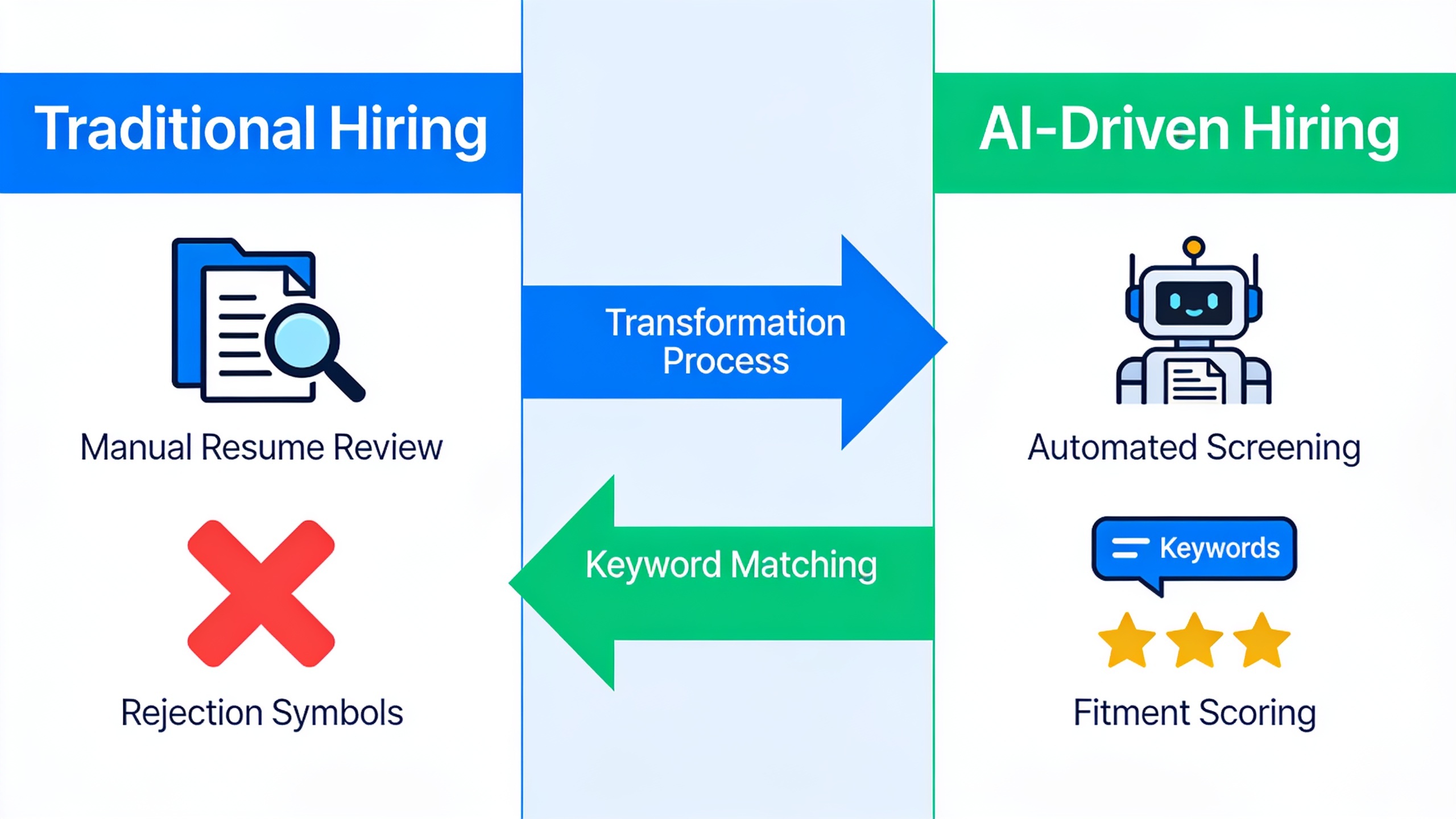
AI recruitment trends in India are dragging hiring away from manual résumé review and toward automated screening, skills-based matching, and predictive candidate scoring. Employers use these tools to cut through massive applicant pools fast, and job seekers are scrambling to learn how those systems judge them.
The big employers, especially in IT services, e-commerce, and BFSI, were the early adopters. They've been running applicant tracking systems that auto-reject or rank résumés based on keyword matches, formatting, and structured data extraction for years now. Industry bodies like NASSCOM have tracked for a long time how tech adoption reshapes the workforce, and honestly recruitment automation might be the clearest live example of it. Recruiters lean on software for that first shortlisting pass, which means a résumé that isn't built to be machine-readable might never reach a human being. Doesn't matter how qualified you are. If the software can't read you, you don't exist.
And that's had a knock-on effect on the rest of us. If an algorithm is judging your application before any person lays eyes on it, the smart play isn't to rage against the machine. It's to understand the machine. That's exactly why so many candidates are picking up their own AI tools now, not to cheat the system, but to present their real skills and experience in a format these systems are actually built to read. If you want to see just how much this matters, go read why 75% of résumés get rejected by ATS systems. It digs into the specific formatting and keyword mistakes that sink perfectly good candidates before a human ever looks.
The screening stuff isn't the whole story either. AI recruitment trends are showing up in interview scheduling automation, chatbot FAQs for candidates, and skills-assessment platforms that grade you on actual tasks instead of just how many years you've clocked. Put it all together and Indian hiring is slowly drifting away from a pure credentials game toward something that rewards demonstrable, verifiable skill fit. Which, if you ask me, is mostly a good thing.
How Does AI Job Search India Help Job Seekers Beat ATS Systems?
AI job search India tools help you beat automated screening by showing you, before you apply, how well your résumé matches a specific job description, and then helping you fix the gaps. No more guessing why your application vanished into a black hole. Now you get direct, data-backed feedback on your actual fit.
The mechanics aren't complicated once someone explains them to you. An ATS usually parses your résumé into fields (work history, education, skills, keywords) and then compares that structured data against what the job posting asks for. But if your résumé uses weird formatting, tables, graphics, or non-standard section headers, that parsing step can fail or misread everything. And that's one of the main reasons genuinely qualified people get filtered out for reasons that have zero to do with their skills. AI-powered job search tools basically flip the whole thing around. Instead of a recruiter's system silently ghosting you, you get to run a similar analysis on yourself first.
Which brings us to fitment scoring. A fitment score is a number, usually on a scale like 0 to 100, that estimates how closely your résumé lines up with a particular job description based on skills overlap, experience level, and keyword relevance. Seeing an actual number instead of that vague "eh, I think I'm qualified?" feeling gives you something to work with. Score comes back low? Now you know which sections to fix instead of firing off the same PDF to fifty postings and hoping one lands.
Comparing AI Job Search Tools Available to Indian Job Seekers
Indian job seekers have a bunch of AI-assisted tools to pick from these days, and each one solves a different piece of the puzzle, from writing your résumé to tracking how well it matches specific openings. Knowing the difference helps you build the right combo instead of assuming one platform does it all (it doesn't).
| Tool Category | Primary Purpose | Typical Output | Best Suited For |
|---|---|---|---|
| Job portals (e.g., Naukri, LinkedIn) | Discover and apply to open roles | Job listings, application tracking | Broad job discovery across industries |
| ATS-style résumé checkers | Assess résumé readability by automated systems | Formatting and keyword feedback | Candidates unsure why applications go unanswered |
| Fitment-score platforms (e.g., JobScans) | Score CV-to-job match and tailor documents | Numeric fitment score, tailored résumé, cover letter | Candidates comparing themselves against specific job descriptions |
| General AI chat assistants | Draft or edit text on request | Freeform résumé bullets, cover letter drafts | Candidates needing writing help without job-specific scoring |
| Career coaching services (human-led) | Personalized guidance and interview prep | One-on-one advice, mock interviews | Candidates wanting human judgment alongside technology |
Like the table says, no single tool replaces the rest. Job portals surface the opportunities, résumé checkers catch your formatting mess, fitment-score platforms connect your document to a specific opening, and human coaching still matters where nuance and negotiation come into play. Most people who actually land jobs in India right now are stacking two or three of these together, not betting everything on one.
How JobScans Fits Into the AI Job Search India Movement
JobScans is an AI-driven job-search platform built specifically for the Indian market, and it lives right in that fitment-score category from the table above. According to its own platform description, you upload your CV and get back a 0–100 fitment score for any specific job posting. So instead of leaving the "am I a good fit?" question to gut feeling, you get an actual quantified answer.
Scoring isn't all it does, though. JobScans also auto-tailors résumés, meaning it can nudge your existing résumé to line up better with the language and requirements of a particular job description. And this genuinely matters, because one generic résumé almost never performs equally well across different roles. Say you're applying for both a data analyst job and a business analyst job. Your underlying experience is the same, sure, but each version probably needs a slightly different emphasis to hit right. On top of that, JobScans generates cover letters, which handles a step way too many people either skip entirely or slap together at 11 PM, even though a tailored cover letter can be the whole difference between getting read and getting skimmed.
It's also free to start, which lowers the barrier for the folks who need it most: fresh graduates chasing their first job, professionals mid career-change trying to reposition old experience for a new field, and honestly anyone just trying to sharpen their application before hitting submit. If you're applying to dozens of roles, having a fitment score for each one beats the old "spray and pray" approach by a mile.
One thing worth being straight about, though. JobScans' own source material doesn't claim specific customer numbers, guaranteed job placement, or details about paid pricing beyond that free start. So when you're sizing up any AI job search India tool, JobScans included, look at what the platform actually says about itself. Don't fill in features that were never promised.
What Should Job Seekers Do to Prepare for an AI-Driven Job Market?
If you want to prep for an AI-driven job market in India, focus on three things: make your résumé machine-readable, tailor your applications to specific jobs instead of blasting a generic one everywhere, and treat AI tools like a first-draft assistant rather than gospel. None of this needs technical skills. It just needs you to change some habits.
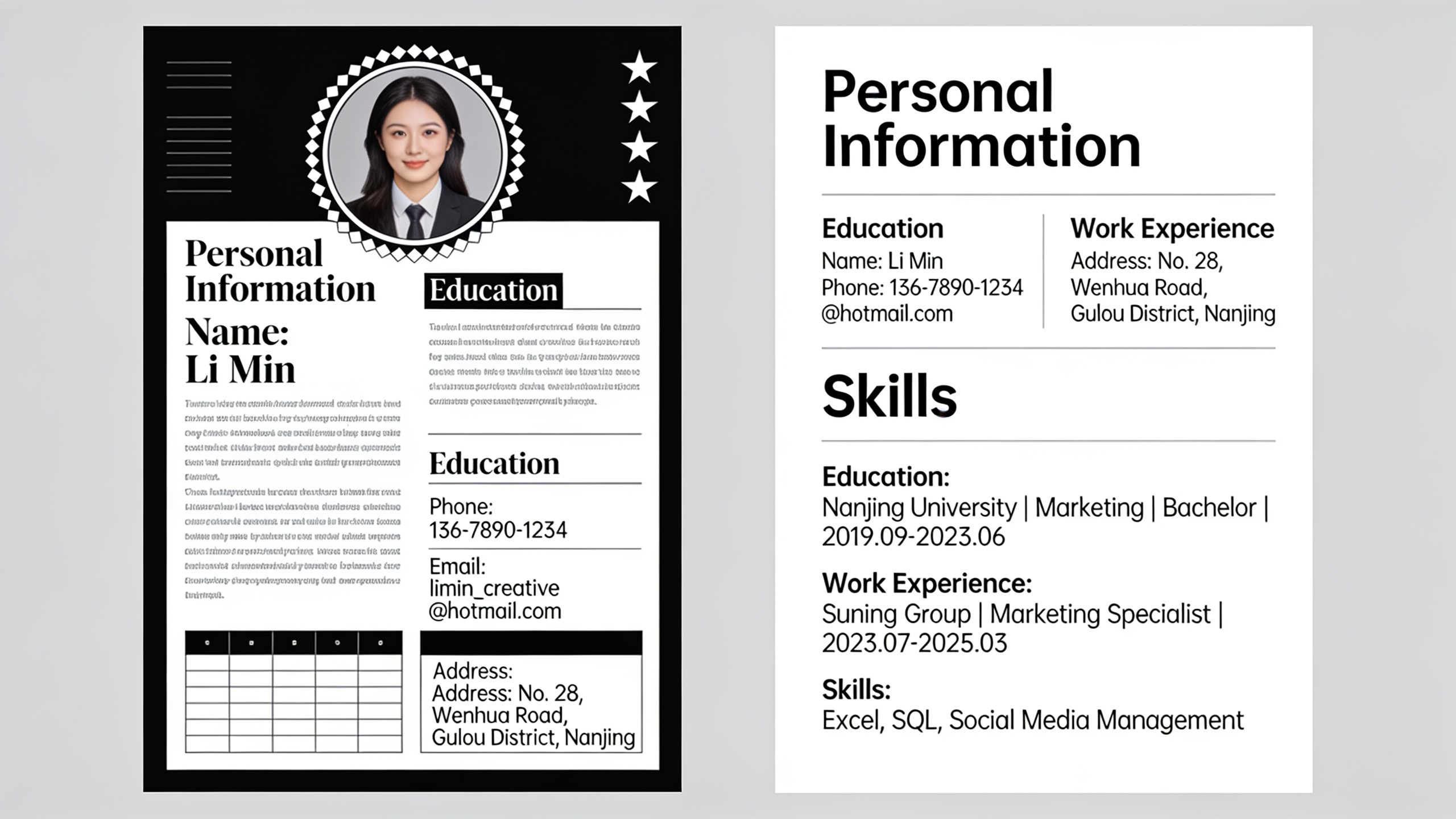
Start with structure before you worry about the content. A résumé with clear, standard section headers (Experience, Education, Skills) in a plain single-column layout is worlds easier for both ATS software and AI scoring tools to parse than some heavily designed, graphics-heavy thing that looks great to you and reads like static to a machine. Small change, huge payoff on whether you even get seen.
Then, tailor instead of mass-applying. I know sending the same résumé to fifty postings feels productive. It isn't. Fifteen well-tailored applications will usually beat it. That's the exact gap fitment-scoring tools were built to close, showing you role by role where your document falls short so you can fix it before you submit, not after the rejection email.
And please, use AI output as a draft, not a finished product. Whether it's a generated cover letter or bullet points an AI assistant suggested, review and personalize every bit of it. Recruiters can smell generic AI text from across the room when there's no specific detail about the company or role. That final polish, mentioning a real project, a shared value, a concrete reason you actually want to work there, still needs a human. Still needs you.
Last thing: keep learning how these systems judge you. Understanding keyword matching, fitment scoring, ATS parsing, it's not trivia. It's practical knowledge that directly decides whether your application gets read. People who treat it as a skill to build, same as any other professional competency, tend to navigate all this with a lot less frustration.
Funny enough, the transparency people now demand from AI hiring tools mirrors what folks expect from service providers in totally unrelated industries. Just like a homeowner wants clear, upfront communication when hiring a contractor, the kind of transparent pricing and dependable service that a company like Minneapolis House Painting is known for in the Twin Cities, job seekers are gravitating toward AI platforms that actually explain how their scoring works instead of hiding behind a black box.
Challenges and Limitations of AI in Job Searching
AI job search tools speed up matching and screening, but they're far from perfect, and you shouldn't treat any single score or recommendation as absolute truth. These models work from patterns in data. They don't grasp your full potential, your soft skills, or your particular circumstances the way a thoughtful human interviewer might.
One well-documented worry across the whole recruitment industry, raised by organizations like SHRM (the Society for Human Resource Management) and in the ongoing global back-and-forth about AI in hiring, is that automated systems can quietly carry forward biases baked into old hiring data if nobody designs and monitors them carefully. That's a legit concern on the employer side of AI recruitment trends, and it's a big reason lots of companies still pair automated screening with human review later on instead of yanking people out of the process entirely.
On your side, the main limitation is simpler. A fitment score or ATS-readability check only tells you how well you align with a job description. It says nothing about how you handle ambiguity, work with a team, or grow into a role over time. A high score can shove your résumé past the first filter, sure. But your interview, your references, your portfolio, that's what actually closes the deal. Think of AI tools as a way to clear the first hurdle more efficiently, not a substitute for real prep, genuine skill-building, and an honest look at where you actually stand for a given role.
And there's the plain reality that not everyone has equal access to this stuff. Internet connectivity, digital literacy, even just knowing these platforms exist. As AI job search India adoption spreads, closing that awareness gap, especially for job seekers outside the big metros, is still a real unsolved problem for the whole industry.
Frequently Asked Questions
Is AI actually replacing recruiters in India?
Not really. AI mostly handles the early, high-volume grunt work: screening résumés, ranking candidates, scheduling. Human recruiters still make the final calls, run the interviews, and hammer out the offers. The whole direction of AI recruitment trends is toward AI-assisted hiring, not fully automated hiring.
So how does a fitment score actually work?
It's a number, usually on a 0–100 scale, estimating how closely your résumé matches a specific job description. It's typically worked out by comparing the skills, keywords, and experience on your résumé against what the posting asks for, giving you a clear, comparable figure instead of a fuzzy hunch about your fit.
Can any of these tools guarantee I'll get a job?
No. And be suspicious of anyone who says otherwise. Final hiring decisions ride on interviews, references, employer budgets, and a pile of factors no platform controls. What these tools can genuinely do is help you get past automated screening and put forward a stronger, better-tailored application.
Do I still need a human-written résumé if I'm using AI tools?
Yep. AI tools work best when they start from your real experience and accomplishments. Auto-tailoring and cover letter generation, like the features JobScans offers, only shine when the info you feed them is accurate and detailed. The AI is enhancing and reformatting what you give it, not inventing your career from thin air.
Why do qualified people still get rejected by ATS systems?
Usually it's formatting and keyword mismatches, not a lack of qualifications. Complicated layouts, oddball section headers, or missing keywords from the job description can make an ATS misread or undervalue you. This exact problem gets pulled apart in the piece on why 75% of résumés get rejected by ATS systems, which is a solid next read if you've been applying everywhere and hearing nothing back.
---
The way India job-hunts is changing faster than most people realize, and it's not slowing down anytime soon. Whether you're a fresh grad sending out your first applications, a professional trying to pivot into something new, or just someone worn out from watching applications disappear into silence, understanding how AI job search India tools work, and using them with a bit of your own judgment, puts you in a far stronger spot than standing on the sidelines waiting for this to blow over. It won't.