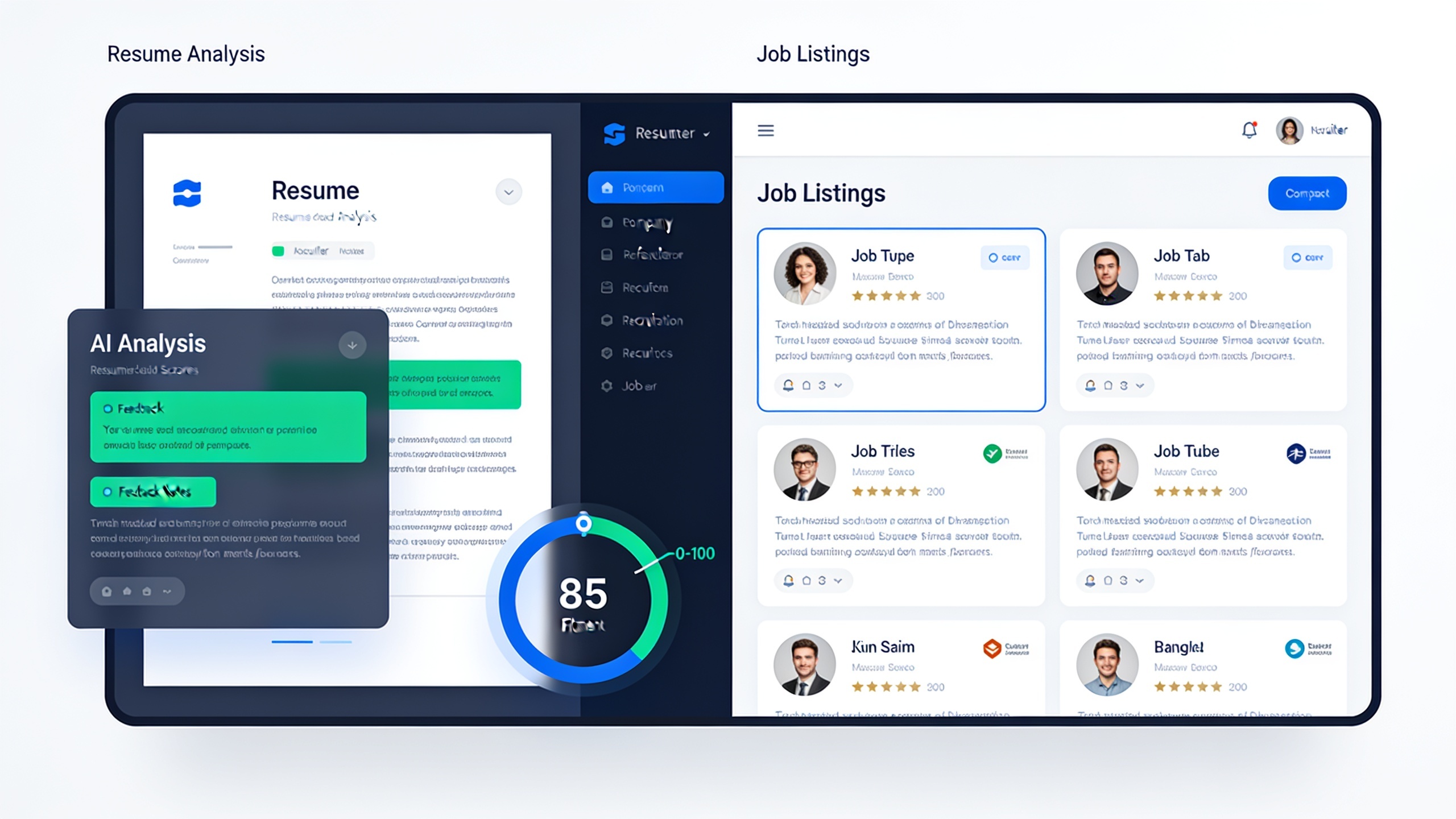
So this isn't really a cage match. It's more about figuring out which one deserves a spot in your toolkit, and whether you actually need both. Let me walk you through it.
Table of Contents
- JobScans vs Naukri: The Core Difference
- What Is JobScans and How Does the Fitment Score Work?
- What Does Naukri.com Actually Offer Job Seekers?
- Feature-by-Feature Comparison Table
- Which One Actually Helps You Land Jobs Faster?
- How to Use Both Platforms Together
- Is JobScans or Naukri the Best Job Platform in India for You?
- Frequently Asked Questions
JobScans vs Naukri: The Core Difference
The core difference is simple: JobScans is an AI resume-optimization tool, and Naukri is mostly a job-listing and recruiter-connection portal. Putting them head-to-head only makes sense once you accept they were built for different stages of the hunt. One helps you find and apply to openings. The other makes sure your resume is actually good enough to get noticed once you've found one.
According to JobScans' own description, the whole thing revolves around uploading your CV, getting an AI-generated fitment score for a job you're eyeing, and then using its tools to auto-tailor the resume and generate a matching cover letter. Narrow and focused. It's aimed squarely at that nagging "will my resume even survive the screening?" question. Naukri, on the flip side, is the big Indian job board everyone knows. You browse listings, drop your resume into a searchable database, and recruiters reach out. I'll be honest here, though: the exact features, pricing, and any AI tools Naukri may or may not run aren't spelled out in the material I looked at for this comparison, so I'm not going to pretend I know things I don't.
And this distinction matters more than people think. Loads of job seekers figure that since both platforms want your resume, they must be more or less the same thing. Nope. One's a search-and-apply engine. The other's a resume-quality engine. Getting that straight is honestly step one in deciding what'll actually get you hired faster.
What Is JobScans and How Does the Fitment Score Work?
JobScans is an AI-driven job-search platform for the Indian market that scores your resume against a specific job description on a 0–100 scale, then hands you the tools to close the gap. The idea's dead simple. Instead of squinting at a job posting and wondering if you're "good enough," you upload your CV, point it at the listing, and get a number that tells you how well your skills, keywords, and experience line up with what the employer actually wants.
How the Fitment Score Works
A fitment score is a numerical guess, on that 0 to 100 scale per JobScans' own description, of how closely your resume matches a job's requirements. In practice it's trying to mimic what applicant tracking systems and recruiters hunt for: relevant skills, matching titles, keyword overlap, the right experience level. So instead of you manually crawling through a job listing line by line, comparing it against your resume, the tool does that grind and gives you one number you can act on.
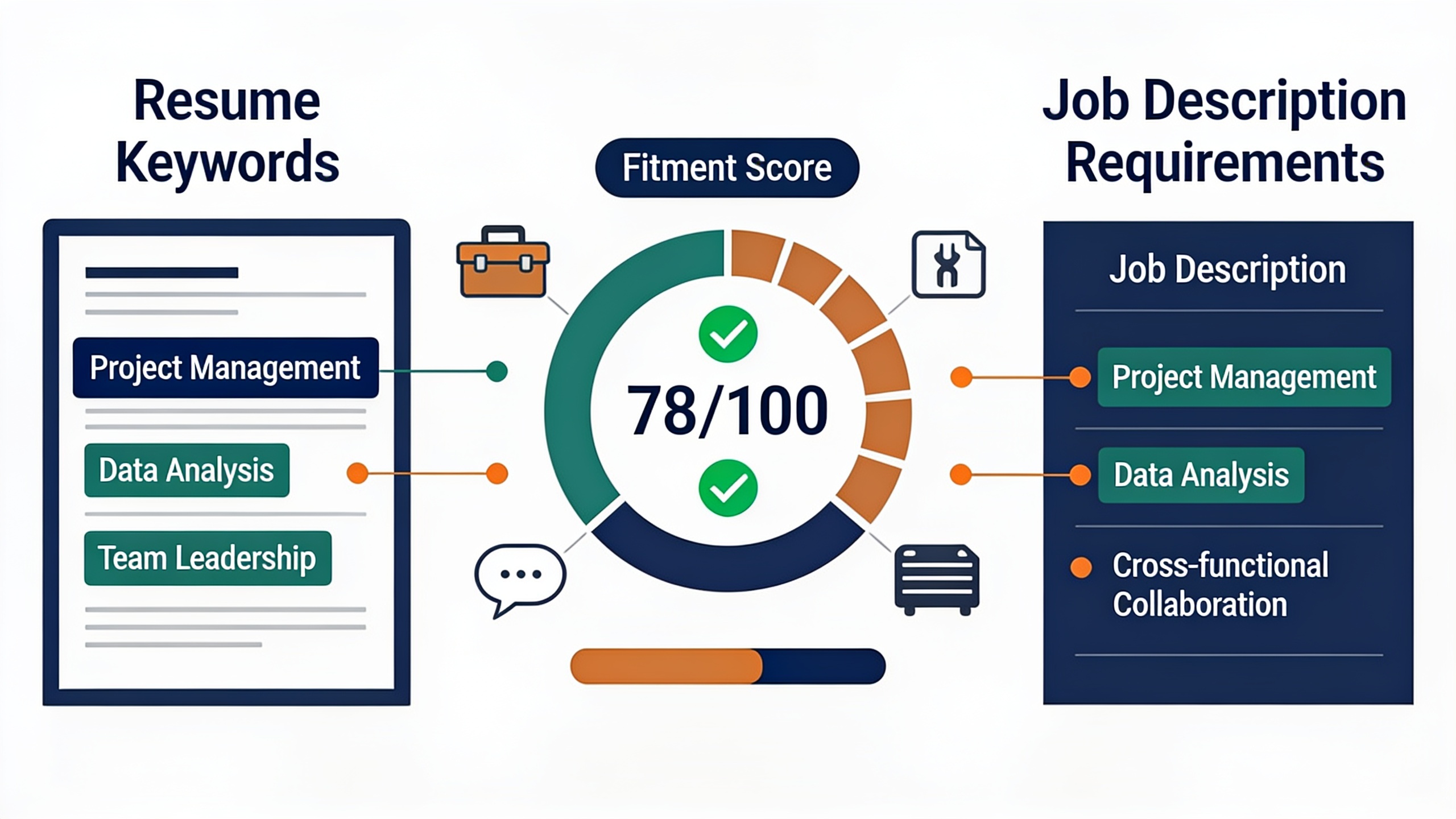
If you're firing off applications to dozens of roles a week (which, let's face it, is pretty normal now), that quick diagnostic saves a ton of guesswork. You stop blasting the same generic resume everywhere and hoping. You can actually see, role by role, where you're strong and where you're falling short before a recruiter even opens the thing.
Auto-Tailoring Your Resume
Beyond scoring, JobScans has a feature to auto-tailor your resume. Meaning it helps tweak your existing content to fit the specific job better, rather than making you rewrite the whole thing from scratch every single time. This is a lifesaver when you're applying broadly across roles that are similar but not identical. Think a marketing coordinator gunning for five different "marketing executive" postings, each one phrasing the requirements just slightly differently.
Cover Letter Generation
JobScans also generates cover letters, per its platform description. And for recent grads or career changers stuck on the whole "how do I sell myself in three paragraphs without sounding like a robot" problem, having something crank out a first draft from your resume and the target job is a genuine relief. That's one of the most time-sucking parts of applying, gone.
It's described as free to start, too, which lowers the bar for students and early-career folks who aren't keen to pay for a tool before they know it's worth anything. If you're a fresh grad specifically, I'd pair it with some broader strategy. Our own Fresh Graduate's Guide to Landing Your First Job in India gets into how to run a first job search when you don't have much of a track record to lean on yet.
What Does Naukri.com Actually Offer Job Seekers?
Naukri.com is one of the most widely used job portals in India, known for hosting listings across industries and letting candidates upload resumes that recruiters can search and reach out to directly. It's been a fixture of the Indian job scene for ages, and it's often the first site students and professionals think of the moment they start looking.
Now, in the name of not making stuff up: this comparison isn't based on a deep audit of Naukri's current features, pricing tiers, or whatever AI tools it may have rolled out. Those specifics just aren't in the verified source material behind this article, so I'm deliberately not going to assert particular numbers or capabilities I can't back up. What I can say, going off its general public rep, is that Naukri's whole thing is volume and visibility. A huge pool of listings, a huge pool of recruiters, and a searchable resume database so employers come find you rather than the reverse.
That's a fundamentally different animal from a fitment-scoring tool. A job board's job is to maximize how many opportunities you get to see and apply to. A resume tool's job is to maximize the odds that any one application actually turns into an interview. Both matter. But they matter at different points in the funnel, and that's the thing to keep front of mind when you're weighing "JobScans vs Naukri" as a real decision instead of assuming one just swaps in for the other.
Feature-by-Feature Comparison Table
Since the two are built around different core functions, a side-by-side is the fastest way to spot where they overlap, where they split, and where public info on Naukri's specifics just isn't available for a fair comparison.
| Feature | JobScans | Naukri.com |
|---|---|---|
| Primary function | AI resume fitment scoring against a specific job | Job listing portal and recruiter-candidate connection |
| Fitment/match score | Yes — 0–100 score based on CV vs. job description | Not stated publicly |
| Resume auto-tailoring | Yes, per platform description | Not stated publicly |
| Cover letter generation | Yes, per platform description | Not stated publicly |
| Job listings/search | Not part of core platform description | Widely known as a core feature |
| Recruiter-side resume database | Not stated publicly | Widely known as a core feature |
| Free tier | Described as free to start | Not stated publicly in reviewed material |
| Primary market | India | India |
The split's pretty obvious once it's laid out. JobScans' documented strengths live almost entirely on the "make my application better" side. Naukri's known strength sits on the "show me more opportunities" side. Neither one is automatically the better platform overall. It genuinely comes down to which part of the process is tripping you up right now.
Which One Actually Helps You Land Jobs Faster?
Honestly? Speed to an offer usually comes from combining discovery with quality, not from picking one "faster" platform. If you can't find enough relevant openings, a listing-heavy site like Naukri fixes that. If you're already applying all over the place and hearing nothing back, your problem is almost certainly resume quality and targeting, which is exactly the hole a fitment tool like JobScans is meant to fill.
Think about the two ways a job search usually stalls. The first is volume. You're not seeing enough relevant roles, or you're seeing them too late, after they've already pulled in hundreds of applicants. The second is conversion. You're applying to loads of stuff but almost never turning an application into an actual interview. A big job board solves the first. A tool that scores and tailors your resume against a specific description solves the second. And here's the uncomfortable bit: if your resume isn't aligned with what a role's actually asking for (missing keywords, generic phrasing, no clear line between your experience and the title) then even a perfect firehose of leads from a portal won't convert into interviews at any decent rate.
This isn't just my hunch. It's a well-documented shift toward automated resume screening. Applicant tracking systems and keyword-matching software are now standard at mid-size and large companies, which is a big part of why resume optimization has grown into its own category of tool rather than something you tack on as an afterthought. We dig deeper into how this is playing out in India specifically over in How AI Is Actually Changing Job Hunting in India, including why a resume that sailed through five years ago might now get quietly filtered out before a human ever lays eyes on it.
For career changers this conversion problem is often way worse than the volume one. Say you're moving from operations into product management. You're probably not short on listings to browse. You're short on a resume that clearly screams "transferable skills" in language a recruiter or an automated screen will recognize. That's a fitment and framing problem, not a discovery problem. Which, again, points you toward the kind of tool JobScans is rather than a listings site.
How to Use Both Platforms Together
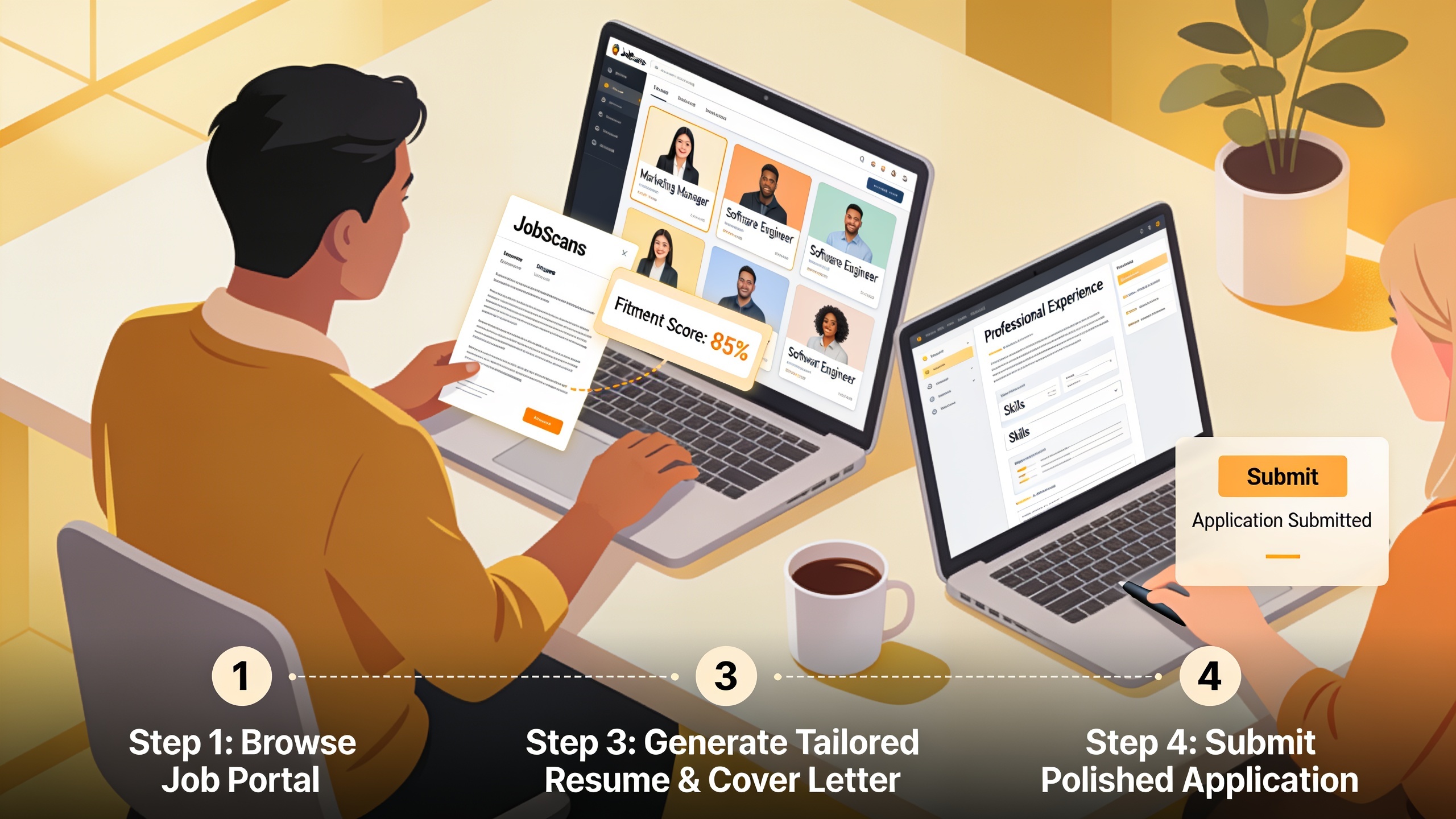
The most practical move for most job seekers is to treat job boards and resume tools as steps in the same workflow, not rivals fighting for your attention. Use a portal to surface roles and build a shortlist. Then run each shortlisted job description through a fitment tool before you hit "apply," so the resume that actually lands in front of a recruiter is tailored to that exact posting instead of some one-size-fits-all copy you've sent everywhere.
In real life it looks something like this. You spend time on a job board scanning listings in your target function and location, saving the ones that genuinely fit your background and goals. Then, before applying to each, you run your resume against that specific description through JobScans to check the fitment score and tweak accordingly. You generate a cover letter for that one role instead of recycling the same tired paragraph. It turns "spray and pray" (same resume, 50 jobs, fingers crossed) into a smaller batch of sharper, better-aimed applications. That's usually a smarter use of your time, even if it feels slower application by application.
Oh, and one more thing worth mentioning. If you're building out this kind of workflow and also thinking about your wider online presence (a portfolio site, a personal brand page, maybe a little side business running alongside the job hunt), there are services built specifically for that layer. For folks who need a professional-looking personal website or landing page to round out their application materials, agencies like Digital Fusion Hub do affordable website design and digital marketing that pairs nicely with the resume and application work you're doing.
Is JobScans or Naukri the Best Job Platform in India for You?
There's no single "best job platform in India" that works for everyone, because the right pick depends entirely on where your search is stuck. Not enough relevant leads? A big listings-based portal is your priority. Plenty of leads but no interviews? A resume fitment and tailoring tool is the more urgent fix.
Recent grads often do best with a combination, since they usually need both a high volume of entry-level openings and help translating thin work experience into resume language that scores well against descriptions that were, let's be real, often written with more experienced candidates in mind. Career switchers lean harder on the resume side, because their struggle isn't finding openings, it's reframing a non-traditional background so it reads as relevant instead of a mismatch. And established professionals who just want to move through the pipeline faster tend to use a fitment score as a final quality check before submitting to a competitive role, treating the number as a signal for whether it needs more polish or it's safe to send.
Since JobScans is described as free to start, there's not much stopping you from trying it alongside whatever discovery method you already use, whether that's a portal, LinkedIn, referrals, or applying to companies directly. These two approaches aren't mutually exclusive. In most real job searches, the fastest route to an offer comes from using a discovery channel to find the opportunities and a resume tool to make sure every application you send is genuinely competitive.
Frequently Asked Questions
So is JobScans just a replacement for Naukri?
Not really. JobScans is about scoring and improving your resume against a specific job, generating tailored resumes, and writing cover letters. Naukri is broadly known as a job-listing portal where you find openings and get discovered by recruiters. They handle different parts of the hunt, so plenty of people use a listings platform to find roles and a fitment tool to prep stronger applications for them.
How does JobScans actually calculate the fitment score?
It generates a 0–100 fitment score by comparing your uploaded CV against the requirements of the specific job you're targeting. The exact methodology isn't broken down publicly beyond that, but the point is to give you a quick numeric read on how well your resume lines up with a given posting.
Is JobScans free to use?
JobScans is described on its own platform as free to start, which makes it easy to test the fitment score, resume tailoring, and cover letter tools before committing to anything.
Does Naukri offer AI resume scoring like JobScans does?
Can't confirm that one way or the other from the verified public info I had, since Naukri's detailed feature specifics weren't part of the source material here. If AI scoring is a big deal for you, check Naukri's current site directly and stack what you find against JobScans' documented fitment-score, auto-tailoring, and cover-letter tools.
Should recent grads bother using both?
A lot of them benefit from it. Use a job-listing platform to build a pipeline of relevant openings, then a resume tool to make sure each application is properly tailored before it goes out. Entry-level roles pull huge numbers of applicants, so a resume that clearly matches the description can matter every bit as much as finding the listing in the first place.
---
So, "JobScans vs Naukri" was never really an either-or. It's just a question of which part of your search needs the most help right now. Short on leads? Lean on a listings-heavy platform. Applying constantly but hearing crickets? It's probably time to check your fitment score and tighten up that resume before you send out application number fifty-one.